
Get SEO Backlinks That Actually Make Sense
Different websites need different types of links. That's why we offer several link building options instead of forcing every website into the same strategy.
Our Professional Services
Guest Blog Posting
Boost up your ranking more faster with premium blogs according to your niche.
Buy NowLocal Business SEO
Rank Your Google My Business profile in maps and gets ranking that boost customers.
Buy nowNon Stop Link Building
15,30,60,120 days continuesly backlinks manually that helps to boost ranking.
Buy NowLocal Business Citations
A separate stratgy used in Google Business Ranking helps to generate leads.
Buy NowClassified Ads
A part of leads generation strategy helps to get some customers for your business.
Buy NowWeb 2.0 Blogs
An offpage strategy to rank your website on google search for an organic results.
Buy NowPDF/PPT Links
Offpage link building strategy to rank website through documents like PDF/PPT.
Buy NowInfographics Links
Offpage link building strategy to make website branding through Infographics.
Buy NowNot sure which link building option is right for your website?
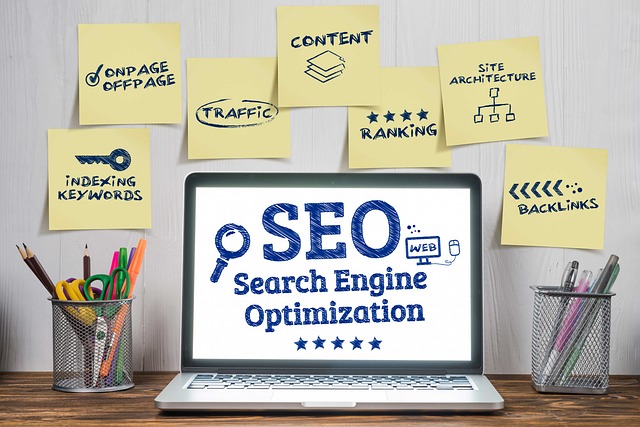
Let's Talk About Backlinks
Backlinks sound simple on paper.
Another website links to yours. That's it, right?
Not quite.
If you've ever worked on SEO for a website, you probably know what happens next. Someone tells you that you need 100 backlinks. Another person says you need high-DA links. Someone else says you should only build dofollow links.
And suddenly, link building starts looking like a numbers game.
It doesn't have to be.
A good backlink should have a reason for being there. The website should make sense. The page should be relevant. And ideally, someone reading that page should have a reason to click the link.
That's the kind of thinking we use when working on link building.
So, What Makes a Backlink Useful?
Let's say you run a website that sells accounting software.
A link from a website that regularly talks about accounting, business software, finance or small businesses makes sense.
A link from a completely unrelated website just because it has a high authority score?
That's a different story.
We look at things like:
- How relevant the website is to your niche
- Where the link is placed
- Whether the surrounding content makes sense
- The quality and activity of the website
- Whether the link has a realistic chance of bringing visitors
- How the link fits into your overall backlink profile
There isn't one magic metric that tells you whether a backlink is good.
High DA / PA Backlinks
DA and PA are commonly used when people compare websites and pages for link building.
They're useful reference points, but we don't treat them as the whole story.
For example, a website with a high DA might still be completely irrelevant to your business. Meanwhile, a smaller website that's closely related to your industry could make much more sense.
So when you're looking at backlink opportunities, don't just ask:
"What's the DA?"
Also ask:
"Does this website actually make sense for my business?"
That's a much better question.
Guest Blog Posting
Guest posting is one of the more familiar forms of link building.
You create an article that fits a website's audience, the website publishes it, and the article can naturally reference your own website where appropriate.
The important part is the content.
If an article exists only because someone wanted to insert a backlink, it usually feels that way.
A useful guest article should be something a real reader would actually want to read.
That's why topic relevance matters so much.
Dofollow Backlinks
You'll often hear people say, "I only want dofollow backlinks."
There's a reason for that. Dofollow links can pass ranking signals between pages.
But that doesn't mean every dofollow link is automatically valuable.
A relevant link from a genuine website can make sense. A random dofollow link from a poor-quality website isn't suddenly valuable just because it carries that label.
Think about the website first.
Then think about the link.
Local Business Citations
Local businesses have another piece of the puzzle.
If you're a dentist in Toronto, a plumber in Texas, or a restaurant in Vancouver, your local presence matters.
Business citations can help keep your business information consistent across relevant directories and local platforms.
Your business name, address, phone number and other details should be accurate and consistent wherever they appear.
It's not exciting work.
But for a local business, it can be useful groundwork.
Local Business SEO & Link Building
Local SEO isn't just about getting your website to rank.
People also need to find your business when they're searching around a particular city or service area.
That's where local links, citations, relevant local websites and business directories can become useful.
For example, a local business may benefit from being mentioned by:
- Local directories
- Industry-specific websites
- Local organizations
- Community websites
- Relevant publications
The goal isn't to collect every directory listing you can find.
It's to build a local presence that actually represents the business.
Classified Ads
Classified websites aren't the first thing most people think about when they hear "SEO backlinks."
And that's fine.
They're not something we'd treat as the entire link building strategy.
But relevant classified platforms can provide another place where your business, service or website can be discovered.
For some businesses, that extra exposure can also bring direct visitors.
So the value isn't necessarily just the backlink itself.
Forum Backlinks
Forum links need a little common sense.
Joining a discussion, answering a question and mentioning your website when it's genuinely useful can make sense.
Dropping the same link into dozens of unrelated discussions?
That's not a strategy I'd recommend.
If you were reading a forum yourself, you'd probably ignore a comment that looked like an advertisement.
So we approach forum links with the same basic rule: the contribution should come first, and the link should make sense within it.
Web 2.0 Backlinks
Web 2.0 usually refers to publishing content on blogging or content platforms.
The idea is fairly straightforward: create useful supporting content and use it as part of a broader SEO strategy.
The mistake is turning every Web 2.0 page into a thin article stuffed with links.
If you're going to create supporting content, give it an actual purpose.
A useful article with a relevant reference is far more natural than a page that exists only to point at another website.
PDF & PPT Links
Not every piece of content has to be a normal web page.
Businesses often have presentations, reports, guides, brochures and other documents that can be turned into useful online resources.
Those documents can sometimes be published on relevant platforms and become another way for people to discover your content.
It's not a replacement for traditional link building.
It's simply another option that can fit into the right campaign.
Infographic Link Building
Some information is easier to understand visually.
That's where infographics can work well.
Suppose you have useful industry statistics, a simple process, research findings or information that people frequently search for.
Turning that information into a well-designed infographic gives other websites something worth referencing.
The hard part isn't making the graphic.
It's finding websites and publishers that would genuinely find it useful.
Press Release Link Building
Press releases can be useful when you actually have something worth announcing.
A new product.
A company launch.
A major update.
A new partnership.
An event.
The mistake is creating a press release every week just to get another backlink.
If there's no real news behind it, there's not much reason for journalists or readers to care.
Use PR when there's something to say. That's where it makes the most sense.
Does More Backlinks Always Mean Better SEO?
No.
And this is probably one of the biggest misconceptions in link building.
Getting 500 random links isn't automatically better than getting 20 relevant ones.
SEO isn't a simple scoreboard where more links always mean a higher ranking.
Search engines look at many different signals, and backlinks are only one part of the picture.
Your website, content, technical SEO, internal linking, search intent and overall authority all matter too.
That's why we prefer to look at link building as one part of SEO, not the entire SEO strategy.
What About Link Building Over Time?
This is where things get interesting.
A website usually doesn't need one giant burst of backlinks and then nothing for six months.
Real businesses keep publishing content. They get mentioned. They launch new services. They create partnerships. They get reviews and references.
Their online presence changes over time.
So a steady, sensible approach to link building can make more sense than constantly chasing a huge number of links in a short period.
There's no universal number of backlinks you "need."
It depends on the website, the competition and what you're trying to achieve.
One Last Thing About Backlinks
If someone tells you that there's a guaranteed number of backlinks that will put your website at the top of Google, be careful.
SEO doesn't work that neatly.
A backlink can help. A relevant mention can help. A strong piece of content can help.
But rankings depend on the bigger picture.
Our approach is simple: build links that have a reason to exist, keep them relevant to the website, and use them as part of a wider SEO strategy.